Learning how to grill authentic jerk chicken transforms ordinary backyard barbecue into a Caribbean culinary experience. Authentic jerk chicken requires specific marinades, proper grilling techniques, and traditional spice blends that create the perfect balance of heat, sweetness, and smokiness. This comprehensive guide reveals traditional Jamaican methods, optimal grilling temperatures, and timing secrets used by Caribbean pitmasters to achieve restaurant-quality jerk chicken at home.
Understanding Authentic Jamaican Jerk Chicken
Authentic jerk chicken originated in Jamaica’s Blue Mountains, where Maroons developed this preservation and cooking method using indigenous spices and wood smoking techniques. Traditional jerk chicken seasoning combines scotch bonnet peppers, allspice berries, thyme, and garlic to create the signature flavor profile that distinguishes genuine Caribbean cuisine from imitation versions. The cooking process involves marinating chicken for minimum 4 hours, preferably overnight, allowing spices to penetrate meat fibers completely.
True authentic jerk chicken requires understanding the balance between five core flavor elements: heat from scotch bonnet peppers, sweetness from brown sugar or molasses, acidity from lime juice, aromatics from allspice and thyme, and smokiness from traditional pimento wood. Modern American adaptations often substitute jalapeños for scotch bonnets and hickory for pimento wood, creating acceptable but less authentic results. Professional Caribbean chefs in the United States increasingly source authentic ingredients through specialty importers to maintain traditional flavor profiles.
What Flavors Constitute Authentic Jamaican Jerk
The authentic jerk chicken seasoning blend consists of scotch bonnet peppers providing 100,000-350,000 Scoville units of heat, allspice berries contributing warm, clove-like notes, fresh thyme adding earthy aromatics, and garlic delivering pungent depth. Additional traditional ingredients include ginger for brightness, cinnamon for warmth, nutmeg for complexity, and soy sauce for umami enhancement. The combination creates a complex flavor matrix where no single ingredient dominates, resulting in the distinctive taste that defines genuine jerk chicken.
Traditional vs Modern Jerk Cooking Methods
Traditional Jamaican jerk cooking utilizes pimento wood from allspice trees, creating distinctive smoke that cannot be replicated with standard American hardwoods. Modern gas grill adaptations substitute applewood or cherry wood chips soaked in water for 30 minutes before use. Charcoal grilling more closely approximates authentic methods, with lump charcoal providing better heat control than briquettes. Professional Caribbean restaurants in major U.S. cities now import pimento wood specifically for authentic jerk chicken preparation.
Best Jerk Chicken Marinade Recipe
Creating the best jerk chicken marinade requires precise ingredient ratios and proper preparation techniques to achieve authentic Caribbean flavor penetration. The foundation marinade combines 6 scotch bonnet peppers (seeded for moderate heat), 2 tablespoons ground allspice, 1 bunch fresh thyme leaves, 6 garlic cloves, 2-inch piece fresh ginger, 3 green onions, 2 tablespoons brown sugar, 3 tablespoons soy sauce, 3 tablespoons lime juice, and 2 tablespoons vegetable oil. Blending these ingredients creates a smooth paste that coats chicken evenly and penetrates meat effectively.
Professional Caribbean chefs recommend marinating chicken pieces for minimum 4 hours, with overnight marination producing optimal results. Whole chickens require 8-12 hours marinating time due to thicker meat sections and bone-in pieces needing deeper flavor penetration. The authentic jerk chicken marinade recipe develops complexity as acidic components break down proteins while spices infuse throughout the meat. Refrigerate marinating chicken at 38°F or below to prevent bacterial growth while maintaining food safety standards.
How to Grill Jerk Chicken on Gas Grill
Grilling jerk chicken on gas grill requires proper temperature zones and timing to achieve authentic results without traditional wood fire cooking. Preheat gas grill to 375-400°F, creating indirect heat zones by lighting only one side of burners for two-zone cooking setup. Place soaked wood chips in aluminum foil packets with holes punched for smoke release, positioning packets directly over lit burners to generate Caribbean-style smoke flavor. This technique replicates traditional pimento wood smoking while maintaining consistent temperature control.
Begin cooking chicken skin-side up over indirect heat for 25-30 minutes, allowing gentle cooking without burning the sugar-based marinade. Move chicken to direct heat for final 10-15 minutes, turning every 3-4 minutes to achieve caramelized exterior and internal temperature of 165°F measured in thickest part. Gas grill cooking requires constant monitoring since sugar content in marinade can burn quickly over direct flames. Baste chicken with reserved marinade every 5 minutes during direct heat phase for enhanced flavor development.
How to Grill Authentic Jerk Chicken on Charcoal Grill
Charcoal grill preparation for authentic jerk chicken begins with creating optimal coal bed using lump charcoal rather than briquettes for superior heat control and cleaner flavor. Light charcoal using chimney starter, allowing coals to burn until covered with light ash coating, approximately 20-25 minutes. Arrange hot coals to one side, creating distinct direct and indirect heat zones essential for proper jerk chicken cooking technique. Add soaked wood chunks directly to hot coals for continuous smoke generation throughout cooking process.
Place chicken pieces over indirect heat zone, maintaining grill temperature between 350-375°F by adjusting top and bottom vents for airflow control. How to grill authentic jerk chicken on charcoal grill requires patience, cooking chicken for 35-45 minutes over indirect heat before finishing over direct coals. The final searing phase develops the characteristic caramelized crust while maintaining juicy interior texture. Total cooking time ranges 45-60 minutes depending on chicken piece size and thickness.
Optimal Coal Arrangement and Temperature Control
Successful charcoal grill jerk chicken requires strategic coal placement using two-zone method with 75% of coals concentrated on one side for direct heat and remaining 25% creating moderate indirect zone. Maintain consistent 350-375°F temperature by adjusting bottom vents to control airflow, opening vents wider for higher temperatures and closing partially for heat reduction. Add 6-8 new charcoal pieces every 30 minutes to maintain temperature stability during extended cooking periods.
Wood Selection for Authentic Smoke Flavor
Traditional pimento wood provides ideal smoke for authentic jerk chicken, though applewood, cherry, or hickory offer acceptable substitutes when pimento is unavailable. Soak wood chunks for 45 minutes before use, creating sustained smoke release without rapid burning. Avoid mesquite or strong-flavored woods that overpower delicate jerk spice balance. Use 4-6 wood chunks per cooking session, adding new pieces every 20 minutes to maintain consistent smoke production throughout the grilling process.
Perfect Timing and Temperature for Jerk Chicken
Achieving perfectly cooked jerk chicken requires precise timing coordination between marinade development, temperature control, and cooking phases to prevent burning while ensuring food safety. Internal temperature must reach 165°F in thickest part of chicken, typically requiring 45-60 minutes total cooking time depending on piece size and grill type. Use instant-read thermometer inserted into thickest part of thigh or breast, avoiding bone contact that can provide false readings and compromise food safety.
Professional Caribbean chefs recommend the two-stage cooking method: initial 30-40 minutes over indirect heat at 350°F, followed by 10-15 minutes direct heat finishing for caramelization. This technique prevents marinade burning while developing authentic jerk crust appearance and flavor. Chicken pieces vary in cooking requirements, with thighs needing 5-10 minutes longer than breasts due to higher fat content and denser muscle structure. Monitor skin color changes from raw pink to golden brown, indicating proper cooking progression.
Common Jerk Chicken Grilling Mistakes to Avoid
The most frequent error when learning how to grill authentic jerk chicken involves cooking over direct high heat throughout the entire process, causing marinade sugars to burn before chicken cooks thoroughly. This mistake creates bitter, charred exterior with undercooked interior, completely destroying authentic jerk flavor profile. Another common problem includes insufficient marinating time, with many home cooks attempting to grill chicken after only 1-2 hours of marination, resulting in surface-level seasoning without deep flavor penetration.
Temperature control failures rank among the top mistakes, particularly maintaining consistent heat zones and managing flare-ups from dripping marinade. Inexperienced grillers often fail to create proper indirect heat zones, cooking chicken entirely over direct flames and producing burned exterior with raw interior. Additionally, many cooks skip the resting period after grilling, immediately cutting into chicken and losing valuable juices that contribute to authentic texture and moisture retention.
Authentic Jerk Chicken Sauce and Accompaniments
Traditional jerk chicken sauce serves as both marinade base and finishing condiment, prepared by reserving portion of original marinade before chicken contact to maintain food safety standards. The sauce intensifies flavors through reduction cooking, concentrating spice elements while developing syrup-like consistency perfect for basting during final grilling stages. Authentic sauce balances heat, sweetness, and acidity in equal proportions, creating complex flavor enhancement rather than overwhelming the grilled chicken’s natural taste.
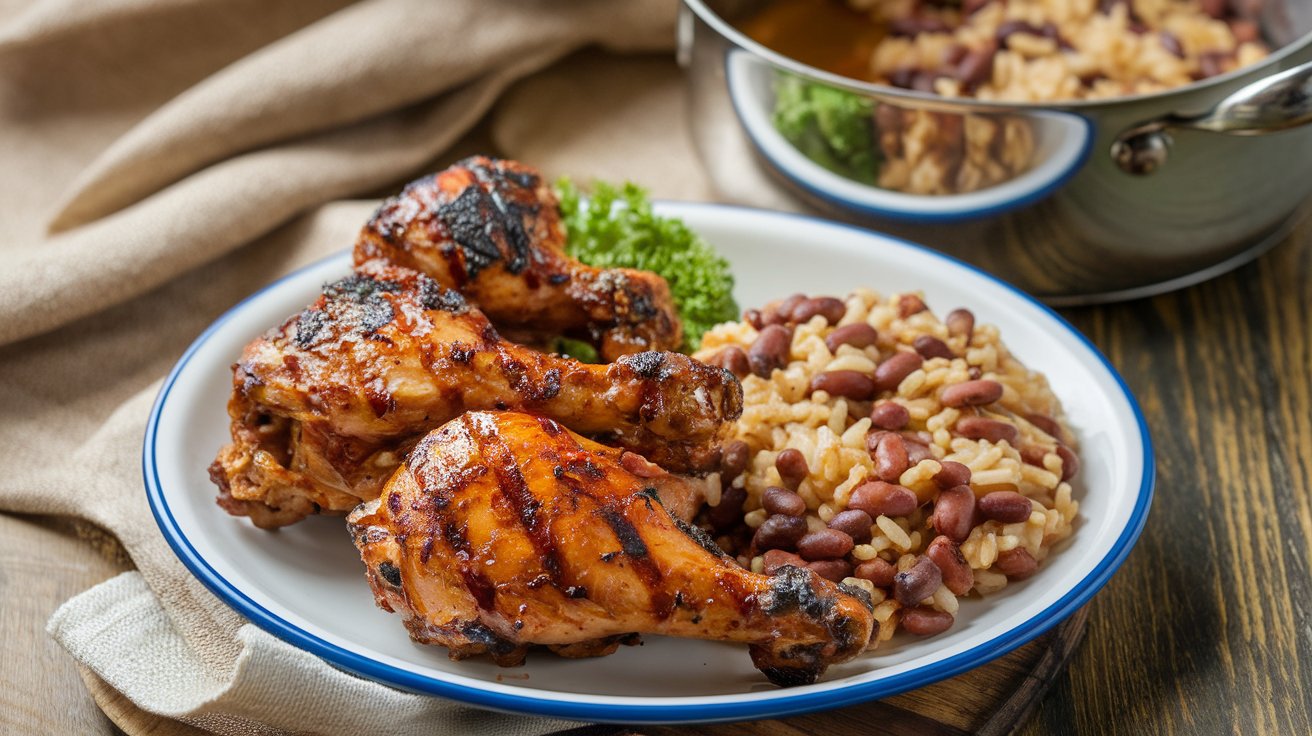
Caribbean accompaniments traditionally include festival bread, rice and peas, fried plantains, and coleslaw to balance jerk chicken’s intense heat and spice levels. Festival bread provides mild, slightly sweet contrast that absorbs excess sauce while offering textural variety. Rice and peas, prepared with coconut milk and kidney beans, delivers creamy richness that complements spicy chicken perfectly. Modern American adaptations often substitute cornbread, coconut rice, or grilled vegetables as suitable accompaniments for authentic jerk chicken meals.
Preparing Traditional Jerk Sauce from Marinade
Creating jerk chicken sauce from marinade requires reserving 1 cup of fresh marinade before adding chicken, then simmering reserved portion in small saucepan over medium heat for 8-10 minutes until reduced by half. Add 2 tablespoons honey and 1 tablespoon apple cider vinegar during final 2 minutes of cooking to balance flavors and achieve proper consistency. Strain sauce through fine mesh to remove solid particles, creating smooth finishing sauce perfect for drizzling over grilled chicken or serving alongside as dipping sauce.
Best Side Dishes for Caribbean Jerk Chicken
Traditional Caribbean sides include coconut rice prepared with basmati rice, coconut milk, kidney beans, and scotch bonnet pepper for complementary heat balance. Fried plantains provide natural sweetness that counteracts jerk spice intensity, while festival bread offers mild, doughy texture for sauce absorption. Modern American adaptations include grilled corn with lime butter, avocado salad with citrus dressing, and roasted sweet potatoes with cinnamon for successful jerk chicken meal completion.
Storage and Reheating Techniques for Jerk Chicken
Proper storage of grilled jerk chicken maintains flavor integrity and food safety for up to 4 days in refrigerator when stored in airtight containers at 40°F or below. Allow chicken to cool completely before refrigeration to prevent condensation that can compromise texture and promote bacterial growth. Separate pieces in single layers using parchment paper to prevent sticking and maintain individual piece quality during storage period.
Reheating jerk chicken requires gentle methods to preserve moisture and prevent overcooking already-grilled meat. Oven reheating at 325°F for 10-15 minutes provides best results, covering chicken with foil to retain moisture while heating thoroughly. Microwave reheating works for quick warming but can compromise texture, requiring 30-second intervals with frequent checking to prevent overheating. Avoid refreezing previously frozen and cooked jerk chicken to maintain optimal food safety standards and quality.
Related video about how to grill authentic jerk chicken
This video complements the article information with a practical visual demonstration.
What you should know
How long should you marinate jerk chicken before grilling?
Marinate jerk chicken for minimum 4 hours, with overnight marination producing optimal results. Whole chickens require 8-12 hours due to thicker meat sections needing deeper spice penetration. The acidic components in authentic jerk marinade break down proteins while spices infuse throughout the meat, creating complex flavor development that improves with extended marinating time.
What temperature should jerk chicken reach when fully cooked?
Jerk chicken must reach internal temperature of 165°F in the thickest part to ensure food safety. Use instant-read thermometer inserted into thigh or breast meat, avoiding bone contact that provides false readings. Total cooking time ranges 45-60 minutes depending on piece size, with two-stage cooking method preventing marinade burning while achieving proper doneness.
Can you make authentic jerk chicken without scotch bonnet peppers?
While scotch bonnet peppers provide authentic heat and flavor profile, habanero or jalapeño peppers can substitute when unavailable. Scotch bonnets deliver 100,000-350,000 Scoville units with fruity undertones that jalapeños cannot replicate. For closest approximation, use 2-3 habaneros per scotch bonnet called for in recipes, though flavor will differ from traditional Caribbean preparation.
What wood is best for smoking jerk chicken?
Traditional pimento wood from allspice trees provides most authentic smoke flavor for jerk chicken. When pimento wood is unavailable, applewood, cherry, or light hickory offer acceptable substitutes. Avoid mesquite or strong-flavored woods that overpower delicate jerk spice balance. Soak wood chunks for 45 minutes before use to create sustained smoke without rapid burning.
How do you prevent jerk chicken marinade from burning on the grill?
Prevent marinade burning by using two-zone cooking method with indirect heat for initial 30-40 minutes, then direct heat for final 10-15 minutes. Cook at 350-375°F rather than high heat, and remove excess marinade before grilling. The sugar content in authentic jerk marinade burns quickly over direct flames, requiring careful temperature control and timing coordination.
What side dishes pair best with grilled jerk chicken?
Traditional Caribbean sides include coconut rice and peas, festival bread, fried plantains, and coleslaw to balance jerk chicken’s intense spice levels. These accompaniments provide cooling contrast and absorb excess sauce effectively. Modern alternatives include grilled corn with lime butter, avocado salad, and roasted sweet potatoes that complement the complex jerk flavor profile while maintaining meal balance.
| Grilling Method | Temperature Range | Cooking Time | Key Advantage |
|---|---|---|---|
| Gas Grill | 375-400°F | 35-45 minutes | Consistent temperature control |
| Charcoal Grill | 350-375°F | 45-60 minutes | Authentic smoke flavor |
| Marinade Time | Refrigerated 38°F | 4-12 hours | Deep spice penetration |
| Internal Temperature | 165°F minimum | Instant verification | Food safety assurance |